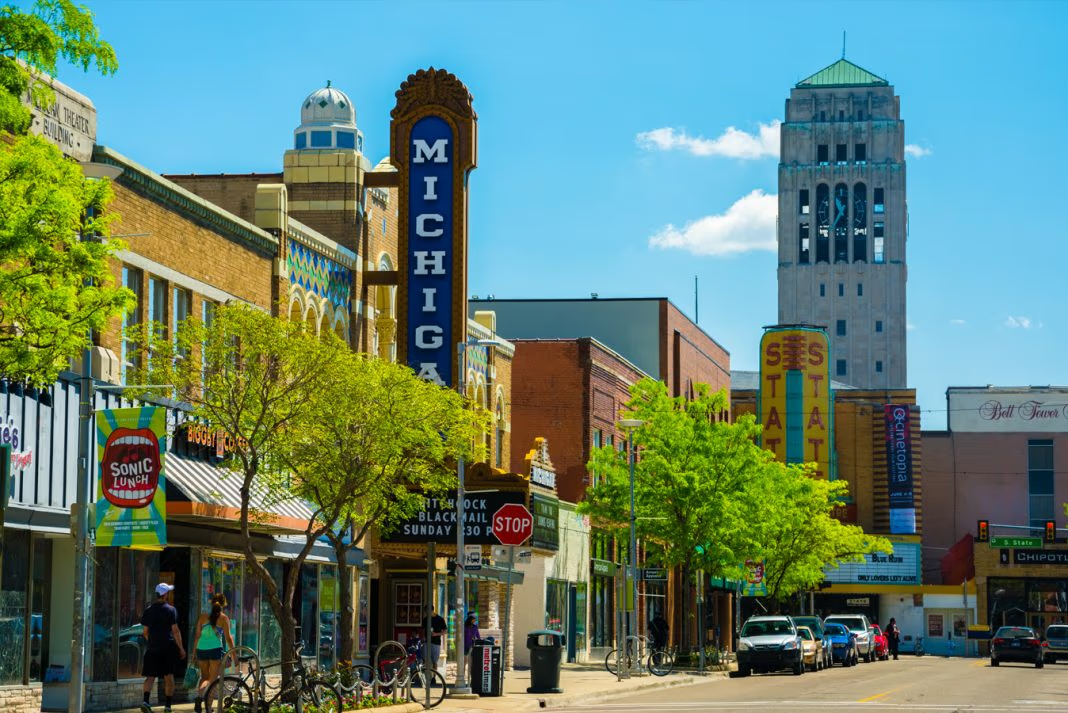
Reporting a dog bite in Ann Arbor. If a dog is attacking or still loose, call 911. For a bite that has already happened inside the city, make a report with the Ann Arbor Police Department through the non-emergency line, (734) 994-2911. The Police Department partners with the Humane Society of Huron Valley for animal control services; the Humane Society is at 3100 Cherry Hill Road, (734) 662-5585. A bite outside the city limits, in the surrounding townships, is reported to the agency that polices that township.
The report starts the rabies observation of the dog, creates the official record, and surfaces prior complaints about the dog. We obtain it, any prior complaints, and the dog’s license record with Freedom of Information Act requests.
Michigan’s dog bite law is short and strict. If a dog bites you without provocation while you are on public property or lawfully on private property, the owner is liable for your damages, regardless of whether the dog had ever bitten before or whether the owner knew it was dangerous (MCL 287.351). You do not have to prove negligence.
In Ann Arbor the bites happen:
- on sidewalks and in yards in the neighborhoods around downtown and campus
- in rental houses and apartment complexes, many of them home to students
- in City parks, at the dog parks, and on the Border-to-Border Trail and the paths along the Huron River
- on mail, package, and food delivery routes
The victim is often a child, a neighbor out for a walk, a runner or cyclist, a guest, or a worker at the door. And the person who pays is usually not the owner. When the owner is insured, the claim is paid by the owner’s homeowner’s or renter’s insurance.
ATLAW has practiced Michigan injury law for 13 years from its office at 3 Parklane Boulevard in Dearborn. The firm has handled more than 10,000 cases and recovered more than $100 million for clients.
- Our Michigan dog bite lawyer page covers the statute, the defenses, and the insurance in full.
- Our Ann Arbor page covers every kind of injury claim in the city.
- Our Ann Arbor personal injury lawyer page explains how a claim proceeds from the first week to the check.
The first conversation is free, in English, Arabic, French, Mandarin, Urdu, or Spanish: (313) 406-7606.
Dog bites by the numbers
| Measure | Figure | Source |
|---|---|---|
| Dog bite reports in Ann Arbor, most recent year | City and Humane Society records | |
| Dog-related injury claims paid by U.S. homeowner’s insurers, 2025 | 28,450 claims; $1.86 billion; average $65,450 | Insurance Information Institute and State Farm, April 2026 |
| Where to report a bite in the city | Ann Arbor Police non-emergency, (734) 994-2911; 911 for an attack in progress | City of Ann Arbor |
| Ann Arbor dog license | City Clerk, Larcom City Hall, (734) 794-6140; 1-year license $6 (neutered) or $12; 3-year $15 or $30; rabies vaccination required | City of Ann Arbor; Ann Arbor Observer guide |
| Age at which a dog must be licensed | 4 months | MCL 287.266 |
| Deadline to sue, adult victim | 3 years | MCL 600.5805(2) |
| Deadline to sue, child victim | 3 years, or one year after the 18th birthday if that is later | MCL 600.5851(1) |
| Rabies observation period for the biting dog | 10 days | CDC rabies guidance |
The national figures matter for one reason: dog bite claims are a routine, insured loss. An insurer paying an Ann Arbor claim is doing what it was paid to do.
The statute, and the two defenses
Strict liability. Under MCL 287.351 you prove three things:
- A dog bit you.
- You were on public property or lawfully on private property. That includes the owner’s own property as a guest, a customer, a tenant, a delivery driver, a utility worker, a mail carrier, or a child playing with permission. The statute specifically covers people performing a duty imposed by law or by the postal service.
- You did not provoke the dog.
The dog’s history and the owner’s knowledge do not matter. There is no “one free bite” in Michigan.
Provocation. This is the owner’s main defense. Michigan courts judge it by whether the person’s conduct would provoke a dog, not by what the person intended (Bradacs v Jiacobone, Mich App 2001). So it can be unintentional: stepping on a dog’s tail by accident can be provocation.
- Usually not provocation: petting a dog, walking or running past it, entering a yard with permission, knocking on a door.
- May be provocation: hitting, teasing, or cornering a dog.
The witnesses to the seconds before the bite decide it.
Trespass. A person unlawfully on private property is not covered by the statute. A child who wanders into a neighbor’s yard is the contested case. A delivery driver or a guest is lawfully present.
Comparative fault. Michigan courts have held that the general comparative-fault rule does not reduce a claim under the dog bite statute; the owner’s defenses are limited to trespass and provocation (Hill v Sacka, Mich App 2003).
Injuries without a bite. These are not covered by the statute:
- a knockdown by a jumping dog
- a fall while fleeing a dog
- a bicycle crash on a trail or street caused by a chasing dog
These are negligence claims, and comparative fault applies. The evidence is the owner’s knowledge of the dog’s tendencies, a dog off its leash in violation of the City’s leash rules, or a broken fence. See our bicycle accident page and Ann Arbor slip and fall page.
Ann Arbor’s leash and licensing rules
Leash rules. The City requires dogs to be on a leash held by a person when walking in public, including on sidewalks, lawn extensions, and in City parks, outside designated off-leash areas. A dog off its leash does not change the bite statute, which makes the owner liable either way. It matters in a non-bite case, where a leash violation is evidence of negligence, and in a claim against someone other than the owner who was supposed to be controlling the dog.
Licensing. Ann Arbor residents license their dogs with the City Clerk, with proof of rabies vaccination. The license and vaccination records identify an owner who denies the dog is theirs and show whether the dog was vaccinated, which decides how urgent the rabies question is. Michigan’s dog law requires a license for a dog four months old or older (MCL 287.266).
Dangerous dogs. A court finding under Michigan’s Dangerous Animals Act (MCL 287.321 to 287.323) is strong evidence in the civil case. The civil case does not depend on it.
Where Ann Arbor bites happen, and who pays
Homeowner’s and renter’s insurance. Dog bite liability is covered by the standard homeowner’s policy and many renter’s policies, often with $100,000 to $500,000 in liability coverage.
- The owner reports the bite, and the insurer pays.
- That is why a claim against a neighbor, a friend, or a relative is less of a barrier than it sounds, and why many bite claims settle without a lawsuit.
- Policies differ on breed and bite-history exclusions, and coverage must be read.
- An umbrella policy above the homeowner’s limit may also apply, and is checked.
Student rentals and apartments. Many Ann Arbor households rent, and many tenants, including students, have dogs. Bites happen on porches, in shared hallways, yards, and parking areas.
- A tenant who owns the dog is liable under the statute. But many student tenants carry no renter’s insurance, or are covered only by a parent’s homeowner’s policy, which may or may not extend to them.
- A landlord is generally not liable for a tenant’s dog. The exception is where the landlord knew the dog was dangerous and had the ability to have it removed, through the lease or otherwise, and did not (Szkodzinski v Griffin, Mich App 1988).
- Prior complaints to the landlord or management company, pet registration records, and the lease’s pet clause are the evidence, and we ask for them early.
See our tenant injury page.
Parks, dog parks, and trails. Ann Arbor’s parks, including Gallup, Bird Hills, and West Park, the off-leash dog parks, and the Border-to-Border Trail along the Huron River, are where runners, cyclists, children, and other dogs’ owners meet loose dogs.
- In a park or on a trail, you are on public property, so the statute applies if a dog bites you.
- In an off-leash dog park, the statute still applies. But how the bite happened, such as breaking up a dog fight, raises the provocation question directly.
- A cyclist or runner knocked down or chased into a fall has a negligence claim, not a statutory one.
The City or the County is generally not liable for a dog in its park.
Campus. Dogs on campus, in the neighborhoods, and on the Diag mean bites to students, staff, and visitors. The dog’s owner is liable under the statute wherever the bite happens. A service dog’s owner is liable under the same statute; disability law protects the right to be accompanied by the dog, not an exemption from the bite statute.
Delivery and utility workers. Package and food delivery drivers, meter readers, and home health aides bitten on an Ann Arbor route have two claims at the same time:
- the statutory claim against the owner
- a workers’ compensation claim against their employer. The comp insurer has a lien on the recovery (MCL 418.827(5)).
Postal carriers are federal employees. Their work-injury benefits come under the Federal Employees’ Compensation Act, not Michigan’s Act, and the federal government is repaid from any recovery against the owner (5 USC 8101 et seq., 8132). App-based drivers who are classified as independent contractors may have no comp coverage, which makes the owner’s insurance the main source. See our Ann Arbor workers’ compensation page.
Uninsured owners. Where the owner rents and carries no insurance, the claim is against the owner personally and is worth what the owner can pay. That is when the search for another responsible party matters: the landlord, a co-owner or keeper of the dog, or a business that kept it on its property. See our premises liability page.
Injuries, children, and scarring
Dog bites cause puncture and crush wounds, torn tendons and nerves, hand and forearm fractures, and facial injuries. Wounds are often left open and treated with antibiotics, and infection is a routine complication. The biting dog is observed for ten days. If it cannot be found, the victim receives post-exposure rabies treatment.
Ann Arbor patients are treated at University of Michigan Health, including C.S. Mott Children’s Hospital for children, and at Trinity Health Ann Arbor. For older adults, a knockdown by a dog can mean a hip or wrist fracture, which is a negligence claim even without a bite.
Children are often bitten on the face and head.
- A facial bite on a child can mean scar revision surgeries over years as the child grows.
- It can also mean psychological injury, which Michigan law compensates and a counselor should document.
- A minor’s settlement must be approved by the court, with the funds protected until adulthood (MCR 2.420). For an Ann Arbor child, that is usually the Washtenaw County Probate Court or the court where the case is pending.
- A child has until the later of the ordinary three years or one year after the 18th birthday to sue (MCL 600.5851(1)). That is not the same as having until the 18th birthday plus three years.
The evidence does not keep that long. Settle or sue when the plastic surgeon’s projection of future revisions is clear.
Damages include, with no cap:
- medical treatment and future scar revision
- lost wages, including a parent’s time off work
- pain and suffering
- permanent disfigurement
- psychological injury
A fatal attack is a wrongful death claim brought by the estate. See our Ann Arbor wrongful death page.
What to do after a dog bite in Ann Arbor
- If the dog is still attacking or loose, call 911.
- Get medical care the same day, even for a bite that looks minor. The record dated that day is the case.
- Identify the dog and the owner: name, address or unit number, and vaccination status. If the owner refuses, note the address and the dog’s description. The license records can identify the owner.
- Report the bite to the Ann Arbor Police non-emergency line, (734) 994-2911, and get the report number. In a rental, also report it to the landlord or management company in writing and keep a copy.
- Photograph the wounds that day and as they heal, and the place where the bite happened, including any broken fence or gate, or the leash, or the lack of one.
- Get witness names. Provocation is decided by what witnesses say happened in the seconds before the bite.
- Do not give a recorded statement to the owner’s insurer or accept an early offer. Facial scarring is not valued until it has matured.
- Ask about the owner’s insurance, including renter’s and umbrella coverage, and in a rental, the landlord’s.
The courts and deadlines
- Dog bite claims up to $25,000 are filed in the 15th District Court at the Ann Arbor Justice Center, 301 East Huron Street.
- Larger claims go to the Washtenaw County Trial Court at 101 East Huron Street.
- Minors’ settlements are approved under MCR 2.420.
| What | When | Statute |
|---|---|---|
| Medical care and bite report | Same day | Public health rules; the evidence |
| FOIA request for the bite report, prior complaints, and license record | Within weeks | Practice |
| Workers’ compensation notice to the employer (bitten on the job) | 90 days | MCL 418.381(1) |
| Suit against the owner, keeper, or landlord, adult victim | 3 years | MCL 600.5805(2) |
| Suit for a child bitten as a minor | 3 years, or one year after the 18th birthday if later | MCL 600.5851(1) |
Why Ann Arbor bite victims call ATLAW
- 13 years of Michigan injury practice; more than 10,000 cases; more than $100 million recovered.
- The owner, the insurer, and in a rental the landlord identified promptly, before the dog and the witnesses are gone.
- Every policy that may apply read before the claim is valued: homeowner’s, renter’s, a parent’s policy for a student, and umbrella.
- Children’s cases handled with court approval, protected funds, and a claim that accounts for the scar revision the child will need years from now.
- No attorney fee or case costs unless we recover money for you. The first conversation is free.
- Consultations can be accommodated in English, Arabic, French, Mandarin, Urdu, and Spanish. We welcome clients to our Dearborn office for a consultation. If you are unable to visit, home or hospital visits can be arranged as needed.