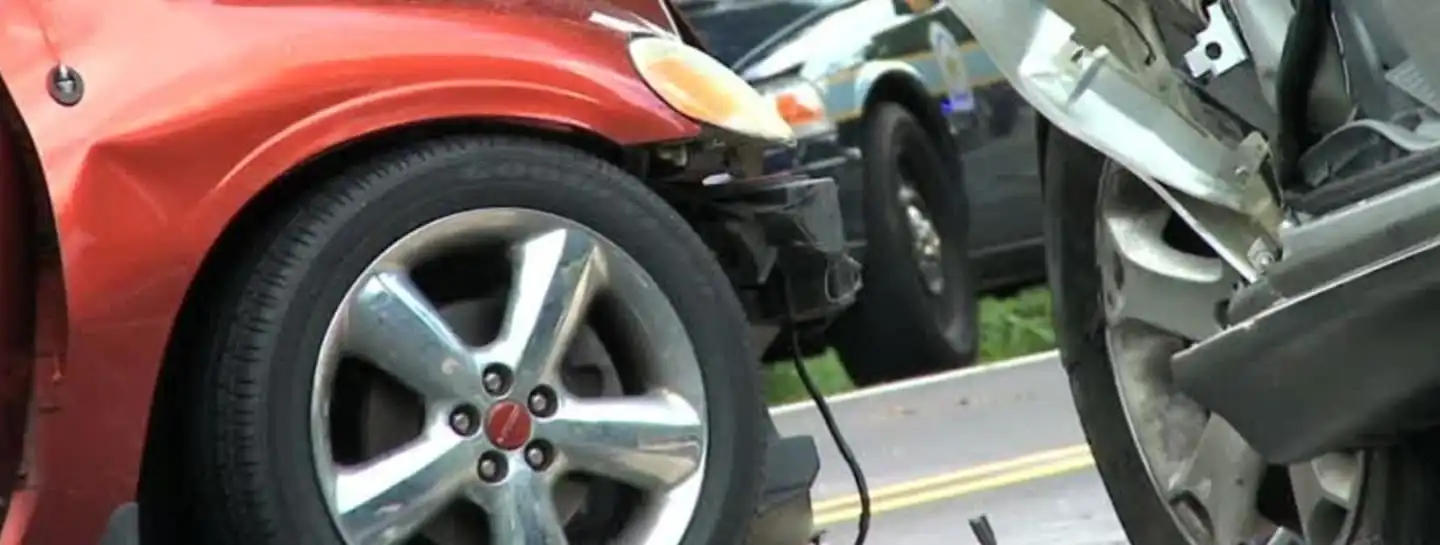
In 2024, 14,439 crashes in Michigan involved a distracted driver. They killed 65 people and injured more than 5,400. Those are the crashes where the officer recorded distraction; the real number is higher, because a driver who was texting rarely admits it at the scene. What has changed since June 30, 2023, is that holding a phone while driving is itself a violation of Michigan law, and the phone company keeps the record that shows whether the driver was using it. A distracted driving case is a car accident case with evidence that can help establish how the crash happened and who was responsible, if someone goes and gets it.
ATLAW is a personal injury firm in Dearborn. In 13 years the firm has handled more than 10,000 cases and recovered more than $100 million for clients across Wayne, Oakland, Macomb, and Washtenaw counties. Distracted driving cases are handled on contingency: no fee unless we recover money for you, and the first conversation is free.
Michigan’s hands-free law
Michigan’s hands-free driving law (MCL 257.602b, effective June 30, 2023) prohibits a driver from holding or using a mobile electronic device while operating a vehicle on a public road, including while stopped at a light. “Using” covers making or receiving a call, sending or reading a text or email, watching or recording video, using social media, and entering information into an app or navigation system by hand.
What is allowed: hands-free use through voice commands or a single touch to start or end a call, a device mounted on the dash or windshield, and use to call 911 or report an emergency. Commercial vehicle and school bus drivers are held to a stricter standard.
Penalties (MCL 257.602b(6)): a first violation is a $100 fine and/or 16 hours of community service; a second or later violation is $250 and/or 24 hours. The fines double if the driver was at fault in a crash while violating the law. Three violations in three years require a driver improvement course. For commercial drivers the fines are $200 and $500.
Kelsey’s Law (MCL 257.602c) goes further for teen drivers: a driver on a Level 1 or Level 2 graduated license may not make, answer, or participate in phone calls while driving, including hands-free calls, subject to statutory emergency exceptions. Other device use remains governed by the hands-free law.
The law changed Michigan from a state that banned only texting (the 2010 law) to a state that bans holding the phone. That matters for an injury case: before 2023, a lawyer had to prove the driver was texting as opposed to dialing. Now, holding the phone is enough.
How a hands-free violation proves your case
In a negligence case, you have to prove the other driver failed to use reasonable care. Michigan treats the violation of a safety statute as evidence of negligence: when a driver breaks a law designed to prevent exactly the kind of harm that occurred, the jury may find negligence from the violation itself. A driver cited under the hands-free law, or shown by phone records to have been using the phone at the moment of the crash, has very little to argue about on fault. The case then turns on the injury and its value.
The evidence, in the order a lawyer pursues it:
- The crash report (UD-10). Michigan officers record a distraction code and the type (cell phone, other electronic device, passenger, activity inside or outside the vehicle). A hands-free citation issued at the scene goes on the report.
- The other driver’s statements, to the officer, to witnesses, and in the first insurance call. “I only looked down for a second” is an admission.
- A preservation letter to the driver and their insurer, sent within days, demanding that the phone and its contents not be wiped, replaced, or reset.
- Phone records by subpoena. Once a lawsuit is filed, the carrier’s records (calls, texts, data sessions, with timestamps) are obtained by subpoena and matched to the crash time from the report, the 911 call, and the vehicle’s event data recorder. The carrier keeps the records; the driver cannot delete them. App-level data (social media, navigation, streaming) can be obtained from the device itself by forensic examination, which the preservation letter protects.
- Vehicle data and infotainment logs, which in most vehicles since the mid-2010s record Bluetooth connections, calls placed through the vehicle, and in some cases text messages.
- Dash cameras and traffic cameras, and in metro Detroit, the city’s Project Green Light cameras at participating businesses, which are overwritten on short cycles.
A driver who denies using the phone and is then confronted with carrier records showing a data session at the moment of impact does not usually go to trial.
How Michigan no-fault applies to a distracted driving crash
Distracted driving changes who is at fault; it does not change how no-fault works. The responsible PIP insurer pays eligible medical expenses under Michigan’s priority rules and the applicable coverage, and 85% of your lost wages (up to $7,455 a month for crashes on or after October 1, 2026), regardless of fault. A PIP lawsuit generally must begin within one year unless timely written injury notice or a previous PIP payment permits later filing, subject to additional filing and recovery limits (MCL 500.3145). To recover for pain and suffering and for economic losses beyond no-fault, you sue the distracted driver, and you may if your injury is a serious impairment of body function (MCL 500.3135). The driver’s violation makes the fault element of that lawsuit close to certain, which in practice means a higher settlement than the same injury with disputed fault.
Comparative fault still applies: if you were more than 50% at fault you cannot recover non-economic damages. A distracted driver’s insurer will look for distraction on your side too, which is a reason not to volunteer your own phone use to an adjuster.
If the distracted driver was working (a delivery driver, a rideshare driver, a company vehicle), the employer may be liable as well, and commercial drivers are subject to the stricter federal and Michigan rules. If the driver was a teen on a graduated license, Kelsey’s Law applies, and the parents’ policy may provide coverage, depending on its terms and whether it covers the teen and the vehicle.
Distracted driving in metro Detroit, 2024
Michigan’s distraction crashes in 2024 by type of distraction, from the State Police: 14.5% involved a cell phone, 10.6% another electronic device, 5.3% a passenger, 36.3% another activity inside the vehicle (eating, reaching, adjusting controls), and 33.3% an activity outside the vehicle (rubbernecking, looking at something on the road). The cell phone share is understated, because it depends on the driver admitting it or the officer observing it.
The four counties ATLAW serves recorded 118,110 crashes in 2024, with 34,424 people injured and 350 killed. The rear-end crash on Telegraph, Ford Road, Van Dyke, Gratiot, or I-94 at a slowdown is the classic distracted driving crash, and the three intersections with the most crashes in Michigan in 2024 (18½ Mile at Van Dyke in Sterling Heights, 11 Mile at Van Dyke in Warren, Telegraph at 12 Mile in Southfield) are all signalized intersections where a driver looking down misses the light.
What to do after a crash with a distracted driver
- Tell the officer what you saw. If you saw the driver on the phone, say so, and ask that it be recorded. If the driver admits it, tell the officer that too.
- Get witness names. A passenger in another car who saw the driver looking down is the best evidence there is before the phone records arrive.
- Note the exact time of the crash, from your own phone or the 911 call. The records are matched to the minute.
- Photograph the other driver’s phone if it is visible (in a hand, in a lap, on the seat, with a screen lit).
- Get medical care the same day and notify the responsible PIP insurer in writing.
- Do not give a recorded statement to the other driver’s insurer, and do not discuss your own phone use with anyone but your lawyer.
- Call a lawyer within days. The preservation letter has to reach the driver before the phone is replaced or reset, and camera footage is overwritten within weeks.
What a distracted driving case is worth
The violation makes fault clear; the value comes from the injury:
- The injury and whether it clears the serious-impairment threshold.
- Economic losses beyond no-fault: medical bills above your PIP level, wages above the cap or beyond three years, future care.
- The driver’s policy limits (Michigan minimum $50,000 per person) and your own UM/UIM coverage.
- The strength of the distraction evidence. A case with carrier records and a citation settles at a different number than a case with a suspicion.
- Employer liability, when the driver was working.
Michigan does not award punitive damages, so the driver’s conduct does not add a separate penalty, but a jury that hears a driver was on social media at the moment of a crash evaluates the injured person’s pain and suffering accordingly.
ATLAW’s results: more than 10,000 cases and more than $100 million recovered for clients in 13 years, across all injury practice areas. Every case is different and past results do not predict yours.
Deadlines
| Deadline | Applies to | Source |
|---|---|---|
| Days | Preservation letter for the phone, vehicle data, and camera footage | Practice |
| 1 year from the crash | Written notice for no-fault PIP benefits | MCL 500.3145 |
| 120 days | Notice if a government vehicle was involved | MCL 691.1404 |
| 3 years from the crash | Lawsuit against the distracted driver | MCL 600.5805 |
Why people in metro Detroit call ATLAW after a distracted driving crash
A Dearborn firm. The office is at 3 Parklane Blvd., Suite 400W, Dearborn, MI 48126.
More than 10,000 cases, more than $100 million recovered in 13 years, across all injury practice areas. Every case is different; the figures show the firm has done this work against these insurers.
No fee unless we win. A contingency fee set in writing before we start. ATLAW advances case costs, so you pay nothing up front; the 33.3% attorney fee is calculated on the recovery after those costs are deducted, and if there is no recovery you owe no fee and no costs.
English, Arabic, French, Mandarin, Urdu, and Spanish. Consultations, intake, and case updates in the language you are most comfortable in.