For twenty years a fall on someone else’s property in Michigan was close to unwinnable, because a hazard that was “open and obvious” ended the case before it began. That rule is gone. Since the Michigan Supreme Court’s July 2023 decision in Kandil-Elsayed v F & E Oil, a Dearborn fall case turns on who had the duty to keep the place safe, what they knew about the hazard and when, what they did about it, and how much of the fall was your fault. In Dearborn those questions have local answers: the east-side business district’s storefronts and their sidewalks, the apartment buildings along Michigan Avenue and Warren, Fairlane and the west-side shopping districts, two college campuses with different governmental status, and a City that assigns sidewalk maintenance to the adjacent owner.
ATLAW is a personal injury firm at 3 Parklane Boulevard in Dearborn. In 13 years the firm has handled more than 10,000 cases and recovered more than $100 million for clients. Our Michigan slip and fall lawyer page covers the law in full, our premises liability, sidewalk injury, and tenant injury pages cover each kind of owner, and our Dearborn page covers every kind of injury claim in the city. The first conversation is free, in English, Arabic, French, Mandarin, Urdu, or Spanish: (313) 406-7606.
The rules, by the numbers
| Rule | Figure | Source |
|---|---|---|
| Sidewalk defect presumed to be reasonable repair | Under 2 inches | MCL 691.1402a |
| Notice to the City of Dearborn or Wayne County for a sidewalk, road, or building claim | 120 days | MCL 691.1404, 691.1406 |
| Notice to the State (UM-Dearborn; MDOT roads) | 120 days | MCL 691.1404, 691.1406 |
| Fault that bars pain-and-suffering damages | More than 50 percent | MCL 600.2959 |
| Deadline to sue a private owner, store, or landlord | 3 years | MCL 600.5805(2) |
| Surveillance footage retention at most businesses | Commonly 7–30 days | Practice |
| Dearborn households that rent | About one in three (31.6 percent) | U.S. Census Bureau, ACS 2020–2024 |
No Michigan agency publishes fall counts by city, so the figures that matter in a Dearborn fall case are the ones on the property: the footage, the inspection log, the prior complaints, and the measurement of the defect.
Where Dearborn residents fall, and who is responsible
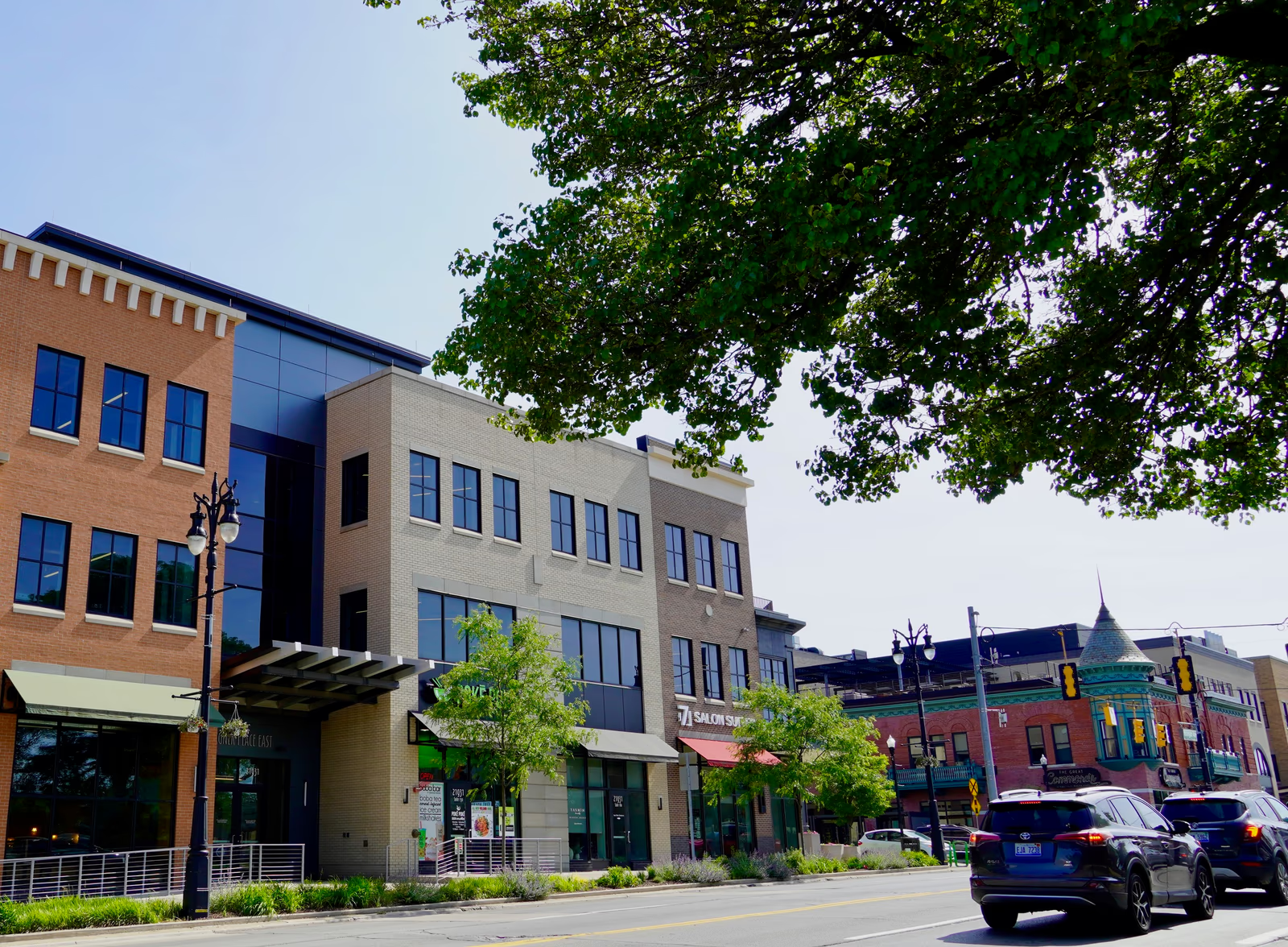
The east-side business district. Grocers, bakeries, restaurants, pharmacies, and shops along Michigan Avenue between Wyoming and Schaefer and along Warren: spills, recently mopped floors, ice at entrances, uneven thresholds, and potholes in small lots. You are an invitee, owed the highest duty: a property owner or possessor must exercise reasonable care under the circumstances, which may include inspecting for hazards, correcting dangerous conditions, or providing appropriate warnings. The case is decided on notice, actual (an employee saw or caused it) or constructive (it existed long enough that a reasonable inspection would have found it), and the footage, cleaning logs, and incident reports that prove it are held by the owner.
Fairlane, Westborn, and the west side. Fairlane Town Center, the Ford Road and Michigan Avenue retail corridors, and downtown West Dearborn: large-format stores and parking structures with extensive surveillance that is overwritten on a schedule, and management companies and tenants who each point to the other. The lease decides who maintained the floor, the lot, and the entrance; we request it with the footage.
Rental housing. Multi-family buildings along Michigan Avenue and Warren and the older east-side housing stock: broken porch steps, missing handrails, unlit stairwells, and ice on the only path from the lot to the door. Landlords must keep the premises and common areas fit for their intended use and in reasonable repair (MCL 554.139). Under Allison v AEW Capital (2008), an inch or two of snow did not make a parking lot unfit for parking. In Bowerman v Red Oak Management (2026), the Supreme Court clarified that the question is whether the common area is fit for the use intended by the parties, considering the tenants it serves; that an obstacle is a mere inconvenience is relevant but not decisive. Where the landlord is the Dearborn Housing Commission, the claim must fit the public building exception with 120-day notice (MCL 691.1406).
City sidewalks. Dearborn’s ordinance places sidewalk maintenance and snow clearance on the adjacent property owner, but that duty alone does not make the owner liable to a pedestrian; an owner who made the sidewalk more dangerous can be (Dearborn Code, Secs. 13-71 to 13-74). A claim against the City itself for a sidewalk defect proceeds under the highway exception (MCL 691.1402): a defect under two inches is presumed reasonable repair (691.1402a), so measure and photograph it with a ruler before it is patched; written notice stating the exact location, the defect, the injury, and the witnesses must be served on the City within 120 days (691.1404). Sidewalks along Michigan Avenue, Ford Road, and Telegraph are still the City’s (MCL 691.1402a).
Two campuses, two sets of rules. The University of Michigan-Dearborn is a State institution; a fall in its buildings is a claim against the State in the Court of Claims with written notice within 120 days (MCL 691.1406); a fall on the grounds outside a building is usually barred by immunity. Henry Ford College is a community college district, a local governmental agency; a fall in its buildings proceeds under the public building exception with 120-day notice (MCL 691.1406). The two campuses adjoin along Evergreen, and the notice goes to a different place for each.
City buildings and venues. The Ford Community and Performing Arts Center, the Henry Ford Centennial Library, City Hall, the police and court building on Michigan Avenue, and the recreation centers: public building exception, 120-day notice. The Henry Ford and Greenfield Village are private nonprofit premises; houses of worship and community halls are private premises; the duty is the ordinary invitee duty. Dram shop claims (MCL 436.1801, 120-day notice from hiring a lawyer) attach where a bar over-served the patron who caused the fall.
Workplaces, hospitals, and nursing homes. A fall at work is a workers’ compensation claim (MCL 418.131) plus a claim against any third party who controlled the premises; see our Dearborn workers’ compensation page. A patient’s fall at Corewell Health Dearborn or in a Dearborn nursing home may be premises, nursing home negligence, or malpractice, which decides the deadline; see our Dearborn nursing home abuse page and Dearborn medical malpractice page. (Bryant v Oakpointe Villa, 2004).
The law after *Kandil-Elsayed*
Under the old rule (Lugo v Ameritech, 2001), an owner owed no duty to protect visitors from a danger an average person would have noticed, and insurers denied many fall claims on that basis. In Kandil-Elsayed v F & E Oil (Michigan Supreme Court, July 28, 2023), the Court held that whether a hazard was open and obvious no longer decides whether a duty existed; it is now a factor in whether the owner breached the duty of reasonable care and how much of the fault belongs to the person who fell, both jury questions. If the jury assigns you some fault, your recovery is reduced by that share; above half, you recover no pain-and-suffering damages (MCL 600.2959). A Dearborn store that left a spill on the floor for an hour cannot win by saying the spill was visible; the questions are what it knew, what it did, and whether you had a realistic alternative route.
Snow and ice
An owner must take reasonable steps, within a reasonable time after snow or ice accumulates, to make walkways safe; what is reasonable depends on the property, and a store open at 9 a.m. after an overnight storm is expected to have salted its entrance. Black ice from refreezing meltwater, a leaking downspout, or a clogged drain can be a condition the owner created, and those cases are stronger than natural accumulation. Dearborn’s ordinance requires owners to clear sidewalks within 24 hours after a snowfall of three inches or more ends.
What to do after a fall in Dearborn
- Get medical care the same day and tell the provider where and how you fell. Corewell Health Dearborn Hospital is where many of the city’s fall injuries are treated.
- Photograph the hazard immediately, from several angles, with something for scale, before it is mopped, salted, or patched. Photograph your shoes.
- Report the fall to the manager, the landlord, or the City, and get the incident report number. Do not give a recorded statement.
- Get witness names, including employees, and note the time; it matters for constructive notice.
- Measure a sidewalk defect with a ruler in the photograph.
- Keep the shoes unworn and unwashed.
- Call a lawyer within days. Footage is overwritten in 7 to 30 days; if the City, the Housing Commission, Henry Ford College, UM-Dearborn, or the State may be involved, the notice clock is already running.
The courts and deadlines
Fall suits over $25,000 are filed in the Third Judicial Circuit Court in Detroit; claims up to $25,000, which many fall cases with modest bills are, in the 19th District Court at 16077 Michigan Avenue, a short drive from our office; claims against the State or UM-Dearborn in the Court of Claims. A fall that causes a brain injury, a spinal cord injury, or a death (wrongful death) is a circuit court case with no cap on noneconomic damages.
| What | When | Statute |
|---|---|---|
| Preservation letter for surveillance footage | Days | Practice |
| Fall on City of Dearborn or Wayne County property; Dearborn Housing Commission; Henry Ford College | Written notice within 120 days | MCL 691.1404, 691.1406 |
| Fall on UM-Dearborn or other State property | Written notice within 120 days, filed with the Court of Claims | MCL 691.1406, 691.1404(2), 600.6431 |
| Dram shop claim | Written notice within 120 days of hiring a lawyer; suit within 2 years | MCL 436.1801 |
| Suit against a private owner, store, or landlord | 3 years | MCL 600.5805(2) |
| Fall treated as medical malpractice | 2 years, with 182-day Notice of Intent | MCL 600.5805(8), 600.2912b |
| Injured child | Suit: until the 19th birthday; City sidewalk or road notice: 180 days | MCL 600.5851(1), 691.1404(3) |
Why Dearborn calls ATLAW after a fall
- An office at 3 Parklane Boulevard in Dearborn, with free surface parking; walk-in consultations are available. 13 years, more than 10,000 cases, more than $100 million recovered.
- Every Dearborn fall evaluated under the law as it stands after 2023.
- Prompt attention to preserving available surveillance footage, inspection records, incident reports, and other time-sensitive evidence.
- The owner identified before the notice runs: private, landlord, Housing Commission, City, college, or State.
- Honest evaluation: some falls are not cases, and we say so in the first conversation.
- No attorney fee or case costs unless we recover money for you. The first conversation is free.
- Consultations can be accommodated in English, Arabic, French, Mandarin, Urdu, and Spanish. We welcome clients to our Dearborn office for a consultation. If you are unable to visit, home or hospital visits can be arranged as needed.